Homeopathy and Umbilical Hernias: A Gentle Perspective on a Structural Problem
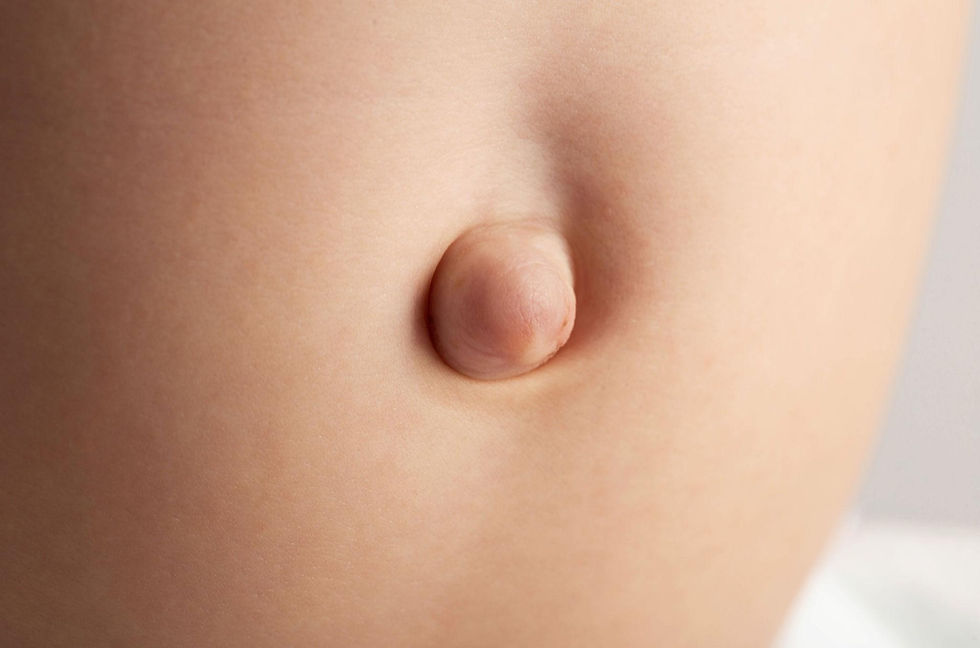
Understanding Umbilical Hernia
An umbilical hernia occurs when part of the intestine, fat, or tissue pushes through a weakness in the abdominal wall near the navel (umbilicus).
In newborns, this defect sometimes closes on its own; in adults, it typically persists or enlarges with time.
Mainstream medicine defines it primarily as a mechanical defect, typically managed through surgical repair. Yet, not everyone is ready for surgery, particularly if the hernia is small or asymptomatic. This is where many individuals turn to homeopathy, seeking to strengthen the body's internal balance and reduce strain on the vulnerable area.
The Homeopathic Lens: Energetic Support, Not Mechanical Repair
Homeopathy does not claim to physically stitch or close tissue gaps. Instead, it seeks to stimulate the organism’s innate tendency toward equilibrium, which improves overall tone, digestion, and connective tissue health. According to classical materia medica (Kent, Boericke, Hering, Nash, Clarke, and others), certain homeopathic remedies have historically been used in cases involving abdominal wall weakness, protrusions, and hernial tendencies.
Below are the most commonly referenced remedies associated with umbilical or ventral hernias.
Key Remedies in Classical Homeopathic Literature
1. Lycopodium clavatum
Lycopodium is suitable for flabby abdominal muscles, distention, and weakness of tissue tone, which can predispose to hernia formation.
2. Plumbum metallicum (Lead
Relevance: Can address retraction of abdominal walls and drawing pain through the umbilicus, Plumbum metallicum is sometimes indicated in post‑hernia neuralgic pain or functional bowel sluggishness, reflecting nervous exhaustion and abdominal wall thinning.
3. Nux vomica
Relevance: Chronic constipation and tension in the abdominal muscles can exacerbate hernial protrusion; Nux aids in mitigating those habitual strains and in improving digestive rhythm.
4. Calcarea carbonica
Relevance: Calcarea carb suits children with large heads and open fontanelles, with umbilical protrusion, and also adults with sluggish metabolism and tendency to tissue weakness.
5. Silicea
Relevance: Silicea is often complimentary to Calcarea remedies, given to strengthen connective tissue and encourage general resilience. Some classic practitioners use it periodically to prevent recurrence after hernia repair.
6. Rhus toxicodendron
Relevance: When hernia or abdominal strain follows overexertion or lifting, Rhus tox can be used to alleviate post‑strain inflammation and improve tissue flexibility.
7. Graphites
Relevance: Can address hernial protrusions especially in women after childbirth, with slow lymphatic function and weakness at the umbilicus.
The Strategy: Address Predispositions, Not Just Symptoms
Rather than a “hernia cure,” the true homeopathic approach focuses on the constitutional terrain that permitted the structural weakness to appear.In practice, a skilled homeopath would:
Identify digestive and metabolic imbalances (gas, liver congestion, chronic constipation).
Choose remedies matching those constitutional symptoms.
Support connective tissue health through lifestyle by doing the following: eating collagen‑rich foods, getting sufficient vitamin C and silica, and engaging in moderate core strengthening postural work.
This is a holistic reinforcement, not a mechanical closure.
An Honest Word on Limits
Even devoted homeopaths acknowledge that when fascial tissue is separated, no energetic or vibrational therapy can pull it together mechanically.Homeopathy may:
Improve comfort.
Reduce bloating or inflammation around the hernia.
Support digestion and bowel regularity. But, if the hernia is worsening, painful, or strangulated — surgical consultation is not optional.
An Integrative Path Forward
Many people successfully combine gentle homeopathic constitutional treatment with:
Nutritional and mineral support (collagen, magnesium, zinc, silica).
Proper ergonomics and breathwork to manage intra‑abdominal pressure.
Avoiding chronic constipation and violent coughing.
Use of a truss or supportive band if necessary.
Viewed this way, homeopathy becomes part of an integrative lifestyle correction, offering energetic harmony and symptomatic relief during observation or recovery but is not a replacement for surgical intervention.
Closing Reflections
Umbilical hernias remind us that health is not purely material nor purely energetic, the body is an expression of both.
While surgery can mend the wall, homeopathy may help strengthen the whole system that allowed that weakness to emerge. The wise path is not either‑or, but rather both‑and: structure supported by energy, and energy grounded in structure. If you would like help attaining optimal health, please reach out https://www.livingwellhomeopathy.com/appointments , livingwellhomeopathy@gmail.com I am here for you!


Comments